Simple Reverse Painting Technique on Acrylic

Reverse Painting Technique on Acrylic-How to make a Mandala Suncatcher

How to make a Mandala Suncatcher using a Simple Reverse Paint Technique on Acrylic

Are you looking for a fun and easy project to make this summer

that both kids and adults will enjoy.

The Mandala Suncatcher is an easy project that uses a reverse paint technique,

paint markers, and StyleTechCraft vinyl.

“This is a sponsored post.  As a member of the StyleTechCraft Design Team I have been provided product and compensation in exchange for my creative ideas.  The views and opinions are my own.

Reverse Painting Technique on Acrylic-How to make a Mandala Suncatcher

Materials Used:  (*affiliate links)

StyletechCraft products brought to you by ATSM Craft*

*Disclosure:  This blog uses ads and affiliate links.  If you choose to make a purchase using one of the links, I receive a small commission (at no additional cost to you) that helps offset the costs of maintaining this blog.  Thanks for your support!
Reverse Painting Technique on Acrylic-How to make a Mandala Suncatcher

Directions:

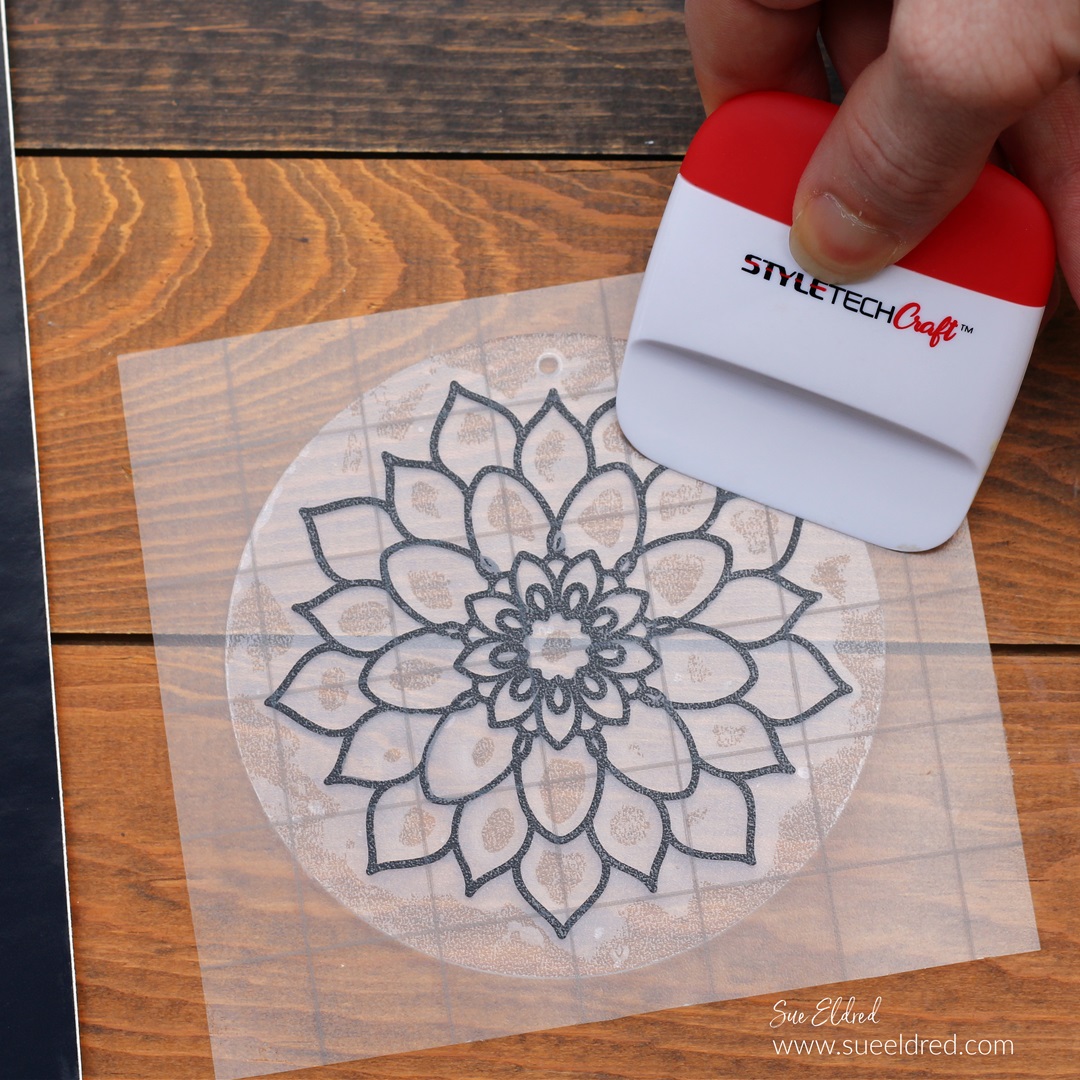
  • The mandala design was cut out of black glossy adhesive vinyl using a Silhouette Cameo Electronic Die Cutting Machine*.
  • After the design has been cut, remove the excess vinyl in and around the design using a vinyl weeding tool*.
  • My acrylic circle* had a protective coating on both sides. Remove the protective layer from one side of the circle.  Place vinyl transfer paper over the mandala design. Rub over the design using a vinyl scraper tool to help the vinyl cling to the transfer paper.
  • Place the transfer paper with the mandala design centered on the acrylic circle.
  • Gently rub over the design and remove the Vinyl Transfer Tape*.

Reverse Painting Technique on Acrylic-How to make a Mandala Suncatcher

  • Turn the acrylic circle over.
  • Remove the protective layer on the back of the circle.
  • You will do a reverse painting technique on the back of the circle.
  • Starting in the center of the design, color using the paint markers.

Reverse Painting Technique on Acrylic-How to make a Mandala Suncatcher

  • Make sure to color to the edge of the lines and get the colors as close as possible.
  • Here is the back of the circle with the mandala design colored in.

Reverse Painting Technique on Acrylic-How to make a Mandala Suncatcher-Sue's Creative Workshop www.sueeldred.com 5502

  • I added a gold edge to the suncatcher using a DecoColor Gold Calligraphy Pen*. (I think it helps the design stand out.)
  • The best part of the reverse paint technique is that when you flip the circle back over, you’ll have crisp black lines.
  • Add gold and white twine to the top of the acrylic circle to hang.

A reverse painting option… for those who don’t have an electronic die-cutter would be to trace a pattern onto the acrylic before painting.  (see below↓)

REVERSE GLASS PAINTING TECHNIQUE WITH DECOCOLOR MARKERS

You can see the original Reverse Glass Painting Technique with DecorColor Markers post here.

Pretty in Pink Mixed Media Canvas

Pretty and Sweet, Delicate and Petite, a mixed media project made simple.

Every once in awhile, I like to do something I little different from my usual projects.
This mixed media canvas is one of those projects.
It reminds me of a crackling wall found in an old cottage.

How to make a Pretty in Pink Mixed Media Canvas

Materials Used:

*Disclosure:  This blog uses affiliate links.  If you choose to make a purchase using one of the links, I receive a small commission (at no additional cost to you) that helps offset the costs of maintaining this blog.  Thanks for your support!

Directions:

  • Prepare the canvas with a painted coat of Gesso.
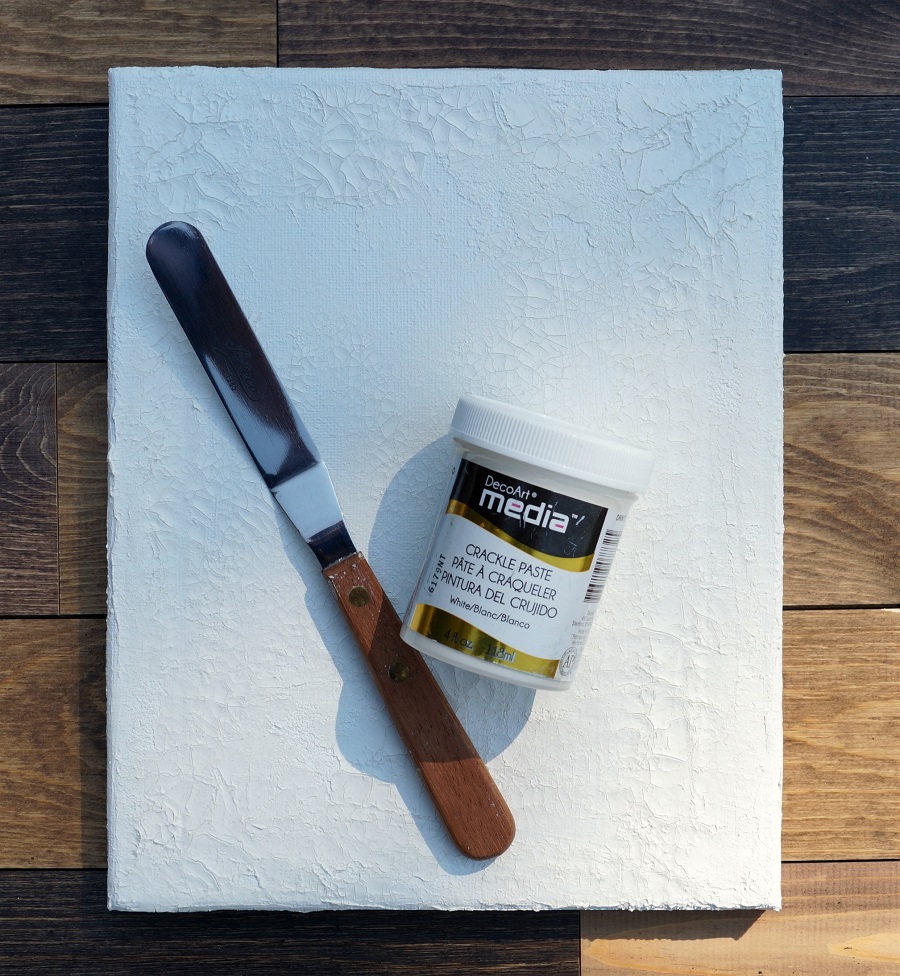
  • Apply Crackle Paste onto the entire canvas using a palette knife.

  • Using a stipple brush*, rub rose-colored ink onto the canvas, giving it a subtle hint of pink.

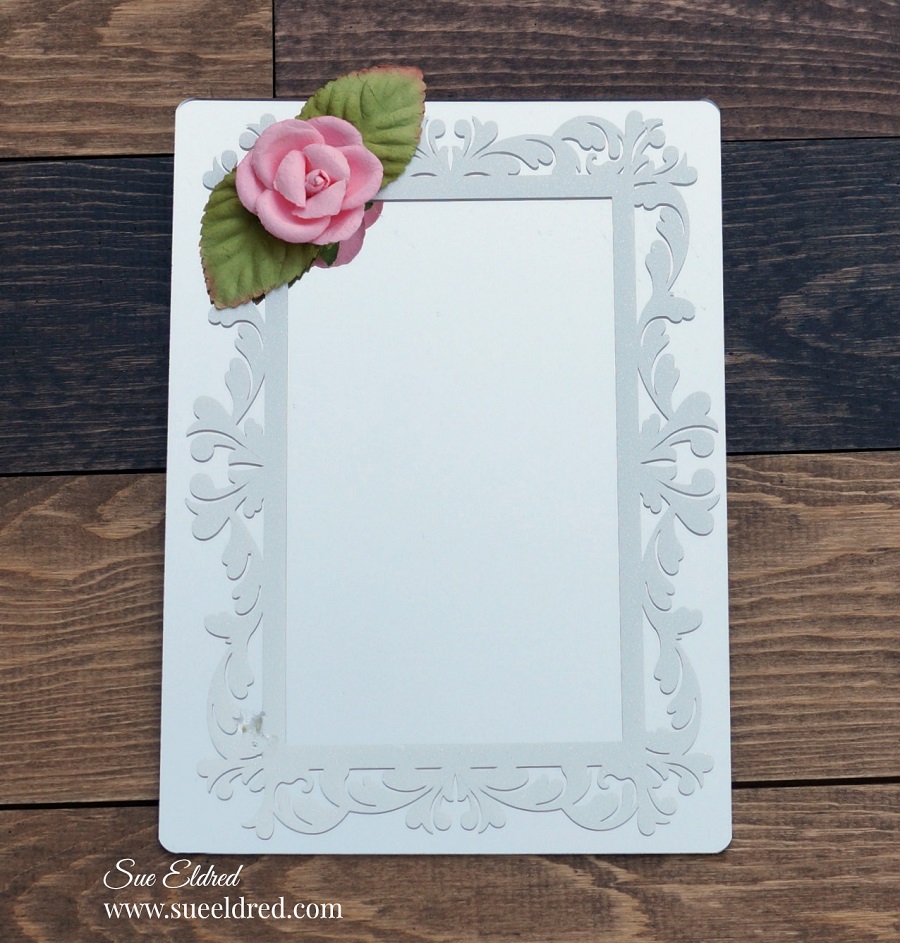
  • Create a delicate scroll frame using white adhesive glitter vinyl, an SVG cut file, and an electronic die cutting machine.
  • Use Transfer paper to align and place the frame onto the mirror.
  • Center and glue mirror onto the canvas with DAP Rapid Fuse All Purpose Adhesive*.

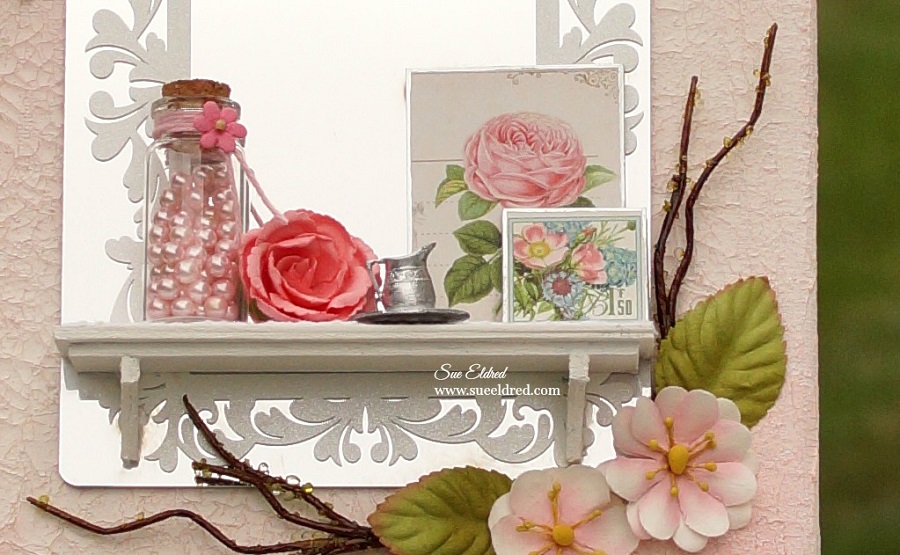
  • The mantle was created by layering, stacking and gluing cut pieces of chipboard with craft glue. (nothing fancy just basic construction)
  • Paint it with white acrylic paint.
  • Glue the mantle onto the mirror using DAP Rapid Fuse All Purpose Adhesive*.

  • For added stability, glue the small floral scrapbook paper pieces onto the chipboard.
  • Decorate the mantle with a small jar filled with pink pearl beads, a miniature pewter pitcher and saucer, and the floral scrapbook pieces.
  • Adhere floral embellishments around the top and bottom corner of the mirror.

For another DIY Mixed Media project, click on the link below.  ↓

         Little Birdie Mixed Media Canvas

Little Birdie Crafts Mixed Media Canvas

Mixed Media Made Simple

In the past, I was intimidated at the thought of doing a Mixed Media project.

I was intrigued but intimidated.

After a few attempts, I found that Mixed media doesn’t have to be intimidating

if you break it down into a few simple steps.

What is Mixed Media?

Mixed Media is a visual art that uses more than one medium or material.  Two common examples of mixed media art are assemblages and collages.  Different materials include cloth, paper, paint, wood, and found objects.

Here’s the 4 basic steps I use:

  1. prep canvas
  2. create background
  3. add dimension
  4. composition

When it comes to Mixed Media, I am still a novice.  The steps I use are mere suggestions.

This month, I got the opportunity to work with Little Birdie Crafts in a Blog Hop with fellow designers of the Designer Craft Connection.  Little Birdie Crafts has a great selection of handmade flowers, chipboard pieces, stencils, paper and so much more.  Right now they have a great sale going on, make sure to check out the Little Birdie Crafts online store.

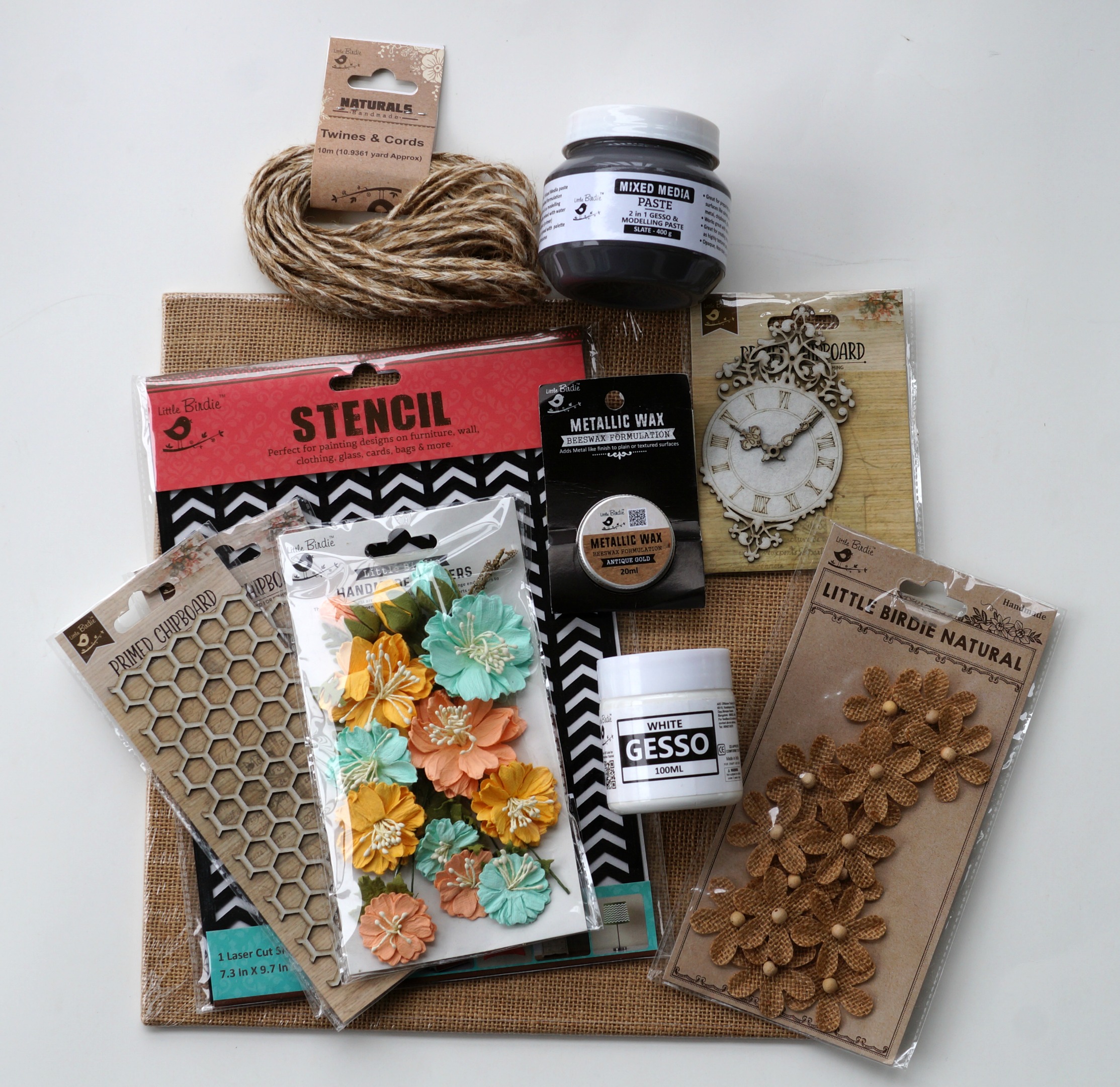
These are the Little Birdie Crafts products used:

  • 12 x 12 Burlap Art Board  (CR73782)
  • White Gesso (CR75625)
  • Antique Gold Metallic Wax (CR79830)
  • Mixed Media Paste-Slate (CR79374)
  • Natalie Pastel Flowers (CR70092)
  • Chipboard Ornate Clock (CR26249)
  • 2-Chipboard Honey Comb (CR56011)
  • Chevron Stencil (CR64149)
  • Jute Braided Twine  (CR82268)

Additional Products Used:                       (*affiliate link)

*Disclosure:  This is a sponsored post.  I have been provided product in exchange for my creative ideas.  The views and opinions are my own.  This blog uses ads and affiliate links.  If you choose to make a purchase using one of the links, I receive a small commission (at no additional cost to you) that helps offset the costs of maintaining this blog.  Thanks for your support!

Step One 1

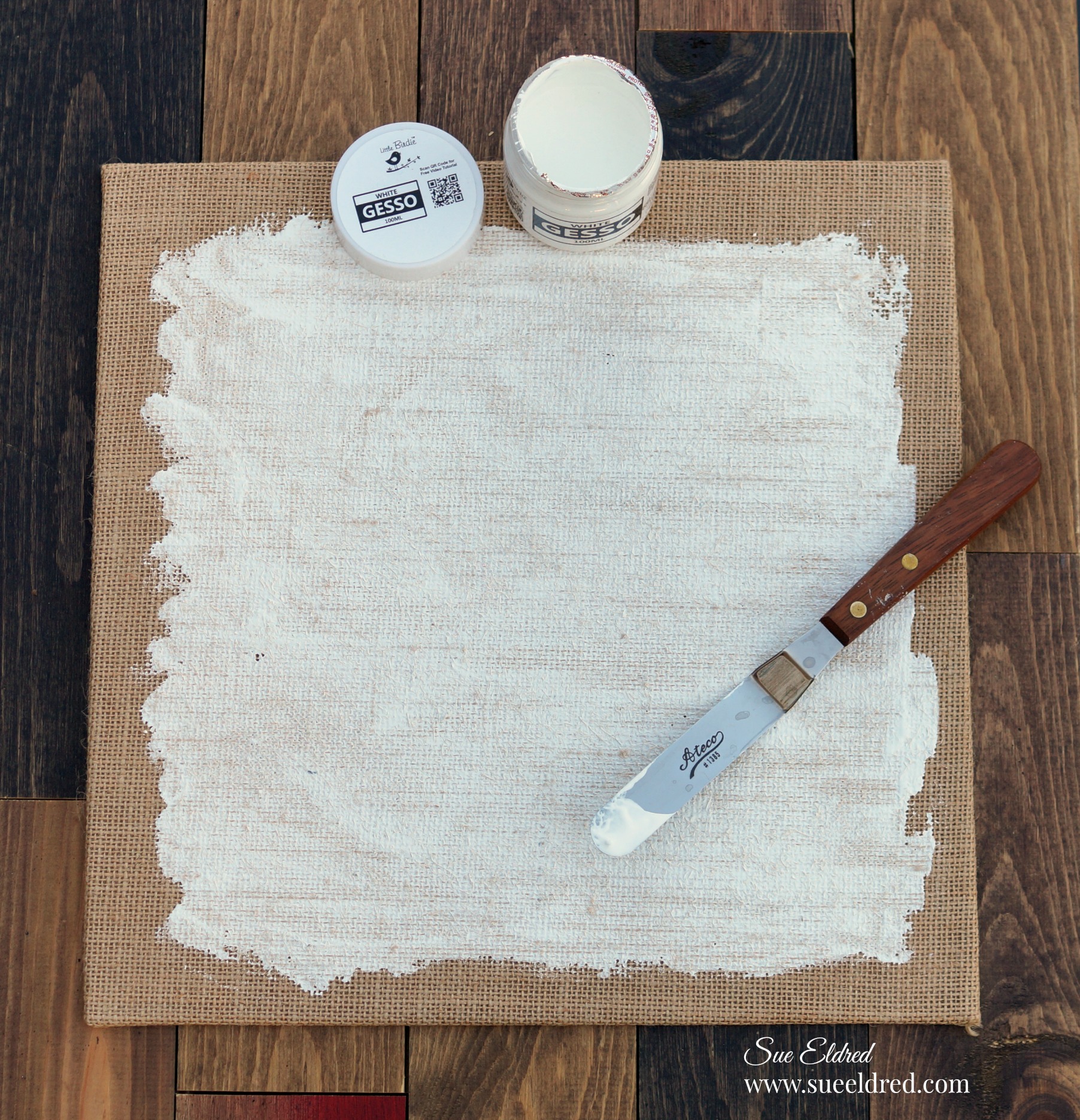
  • Prep burlap canvas with gesso using a palette knife or paintbrush to prepare the surface for paint.

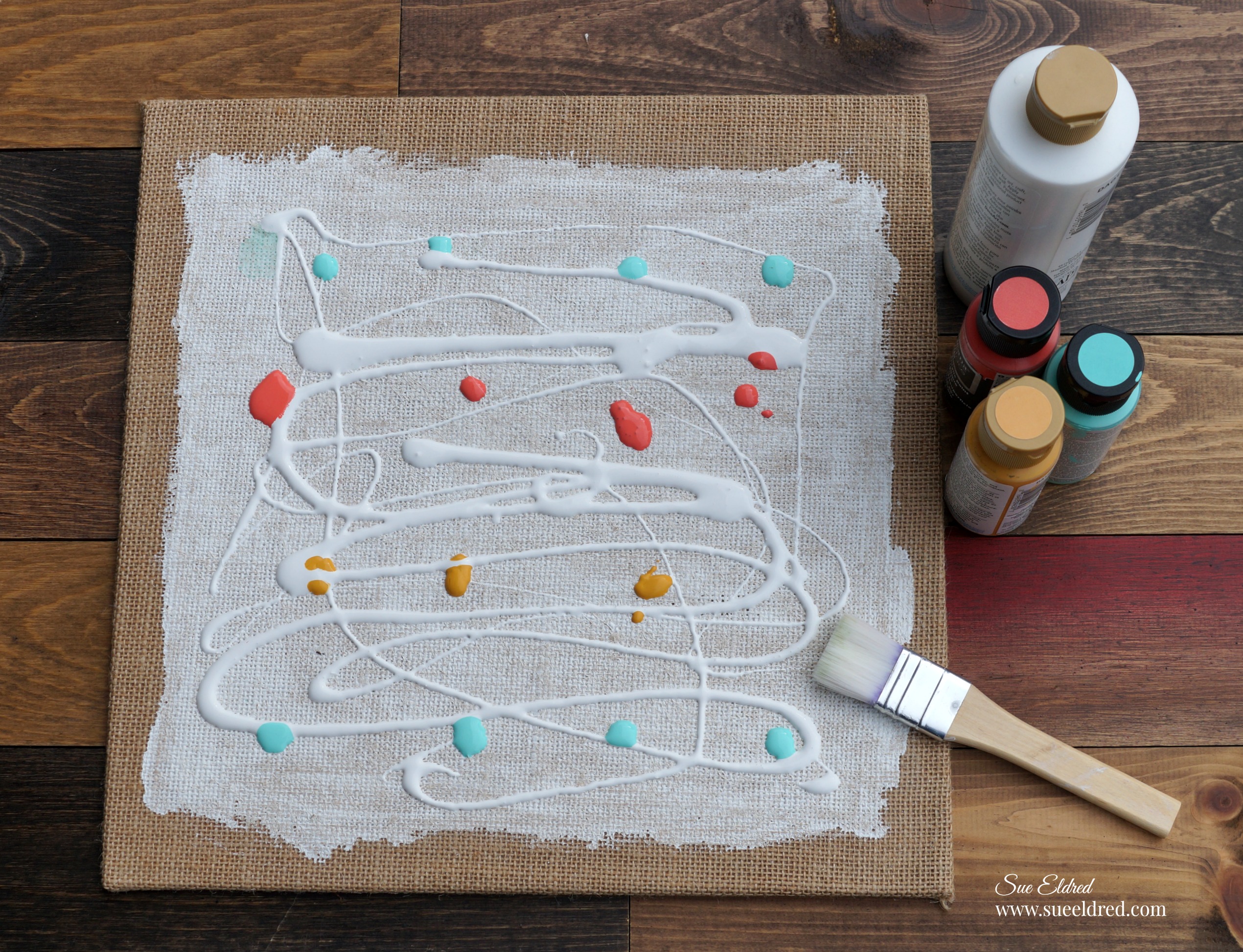
  • Add white acrylic paint over the surface of the canvas, and drips of coral, marigold and aqua paint.

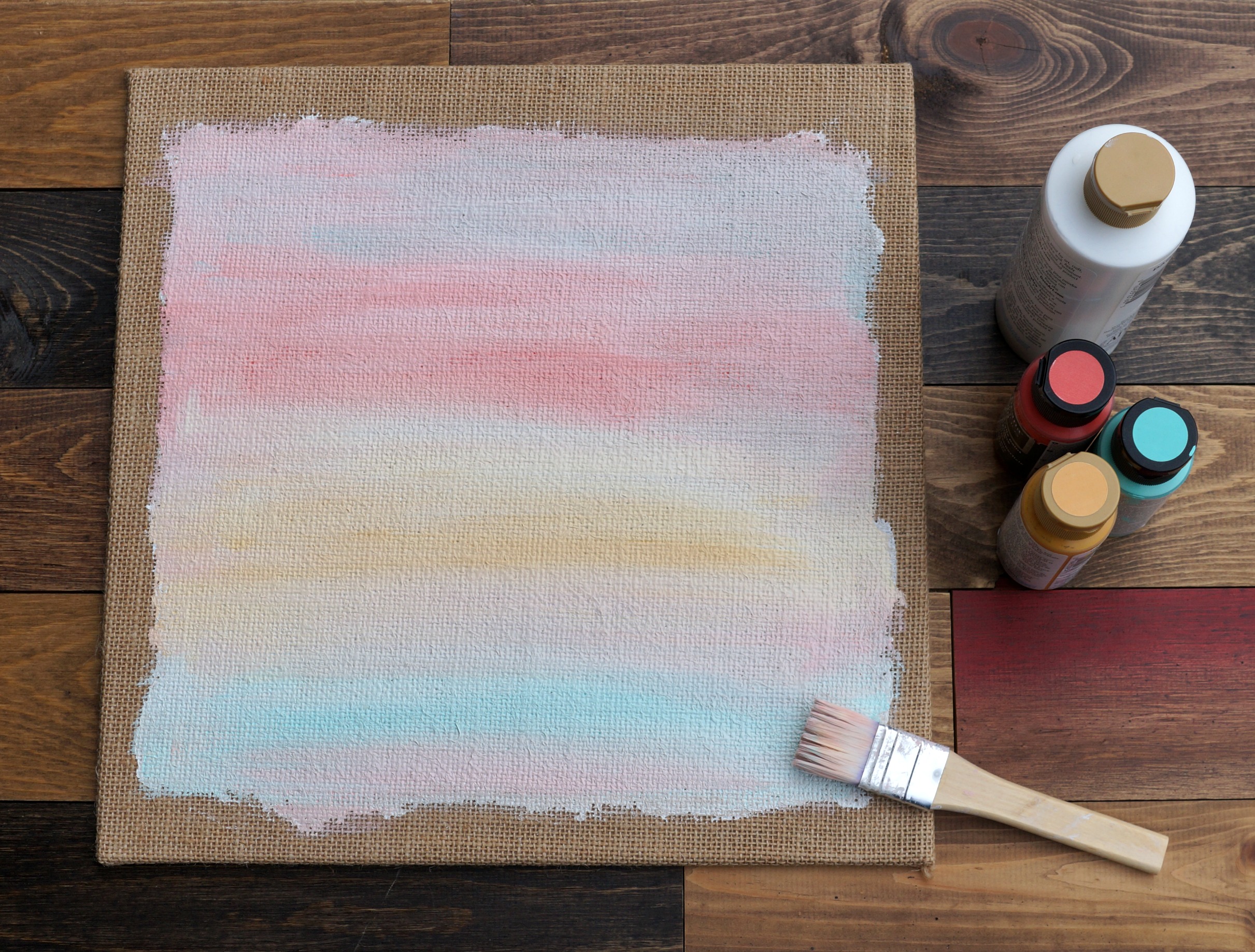
  • Blend horizontally across the canvas using a paintbrush to create a soft background.

Starting the process of building the background.

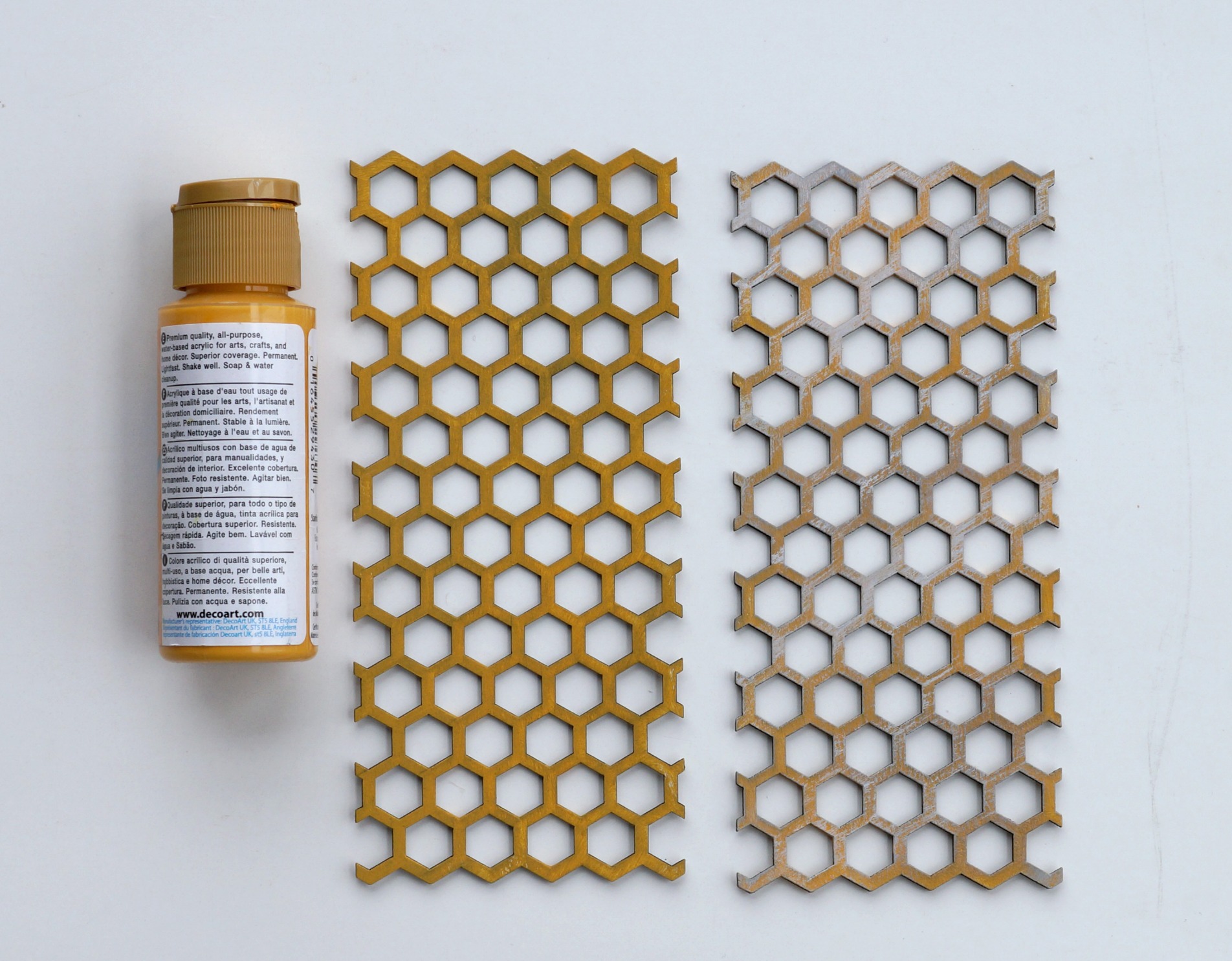
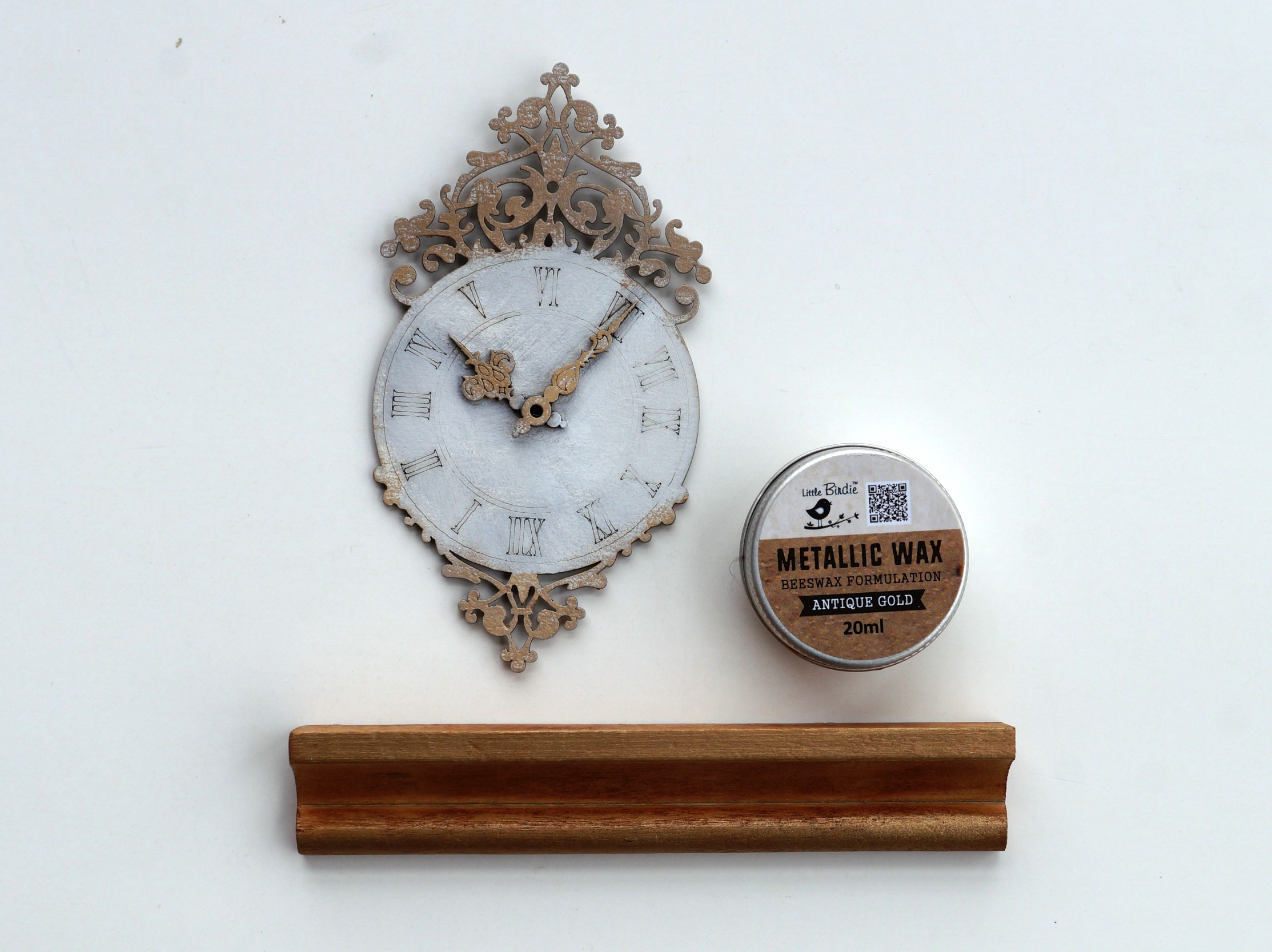
  • Paint chipboard honeycomb with marigold paint and dry brush with white acrylic paint.

  • Lightly paint chipboard clock with white acrylic paint.  Rub antique gold metallic wax to accent the ornate edges and hands of the clock.
  • The shelf is a scrabble tile holder that was stained using Vintage Photo Ink.  It’s hard to see in this picture but the edge of the shelf is accented in the antique gold metallic wax.

Texture and dimension adds interest to the canvas.

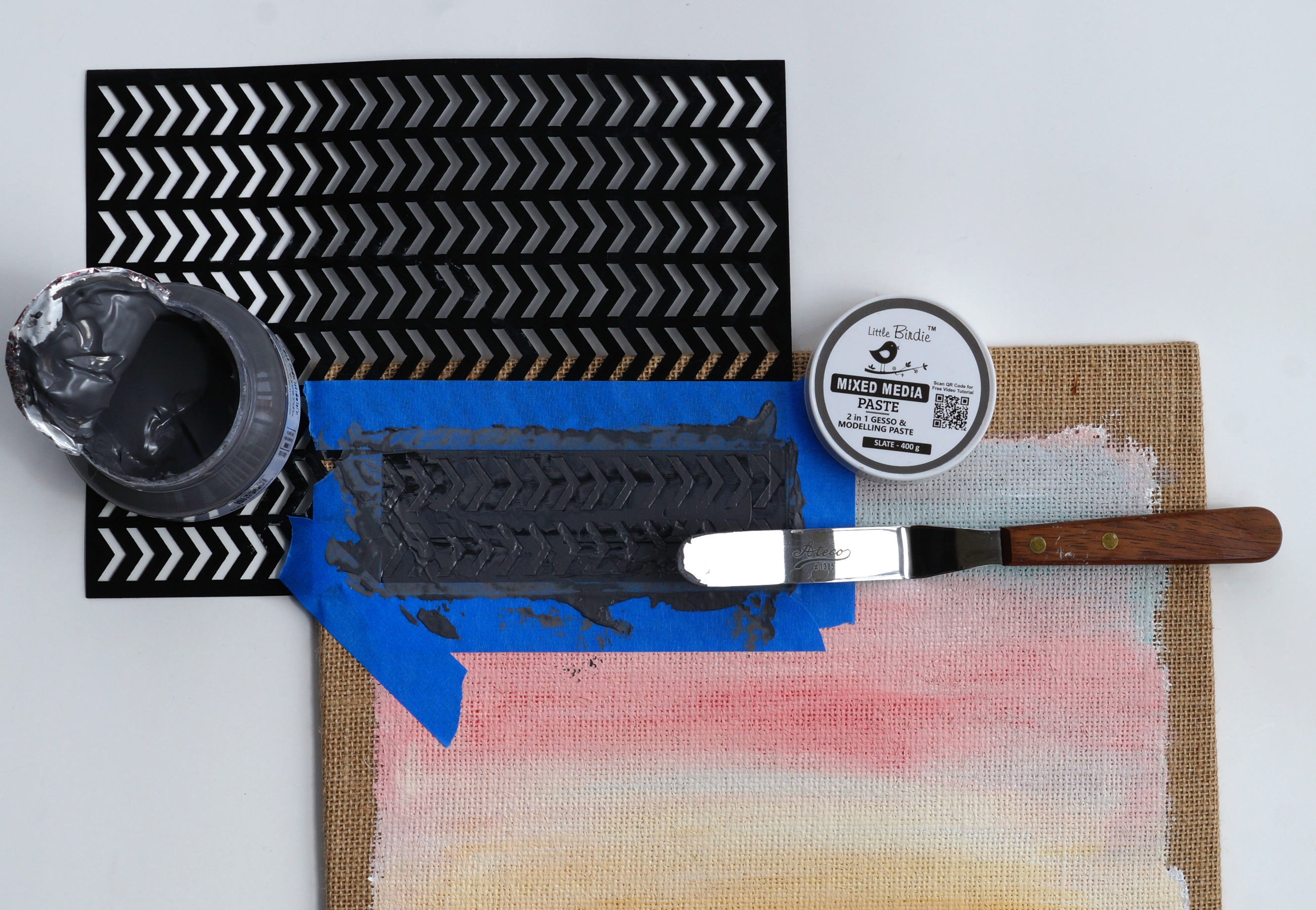
  • Tape stencil to board using removable painter’s tape to mask the area that you want to add the mixed media paste.  Apply paste in a thin layer onto the board using a palette knife.

Step 2 Building the Background

  • Once the texture paste has dried.  Go over the paste with a thin layer of white acrylic paint to lighten it.  Apply antique gold metallic wax to accent the texture.
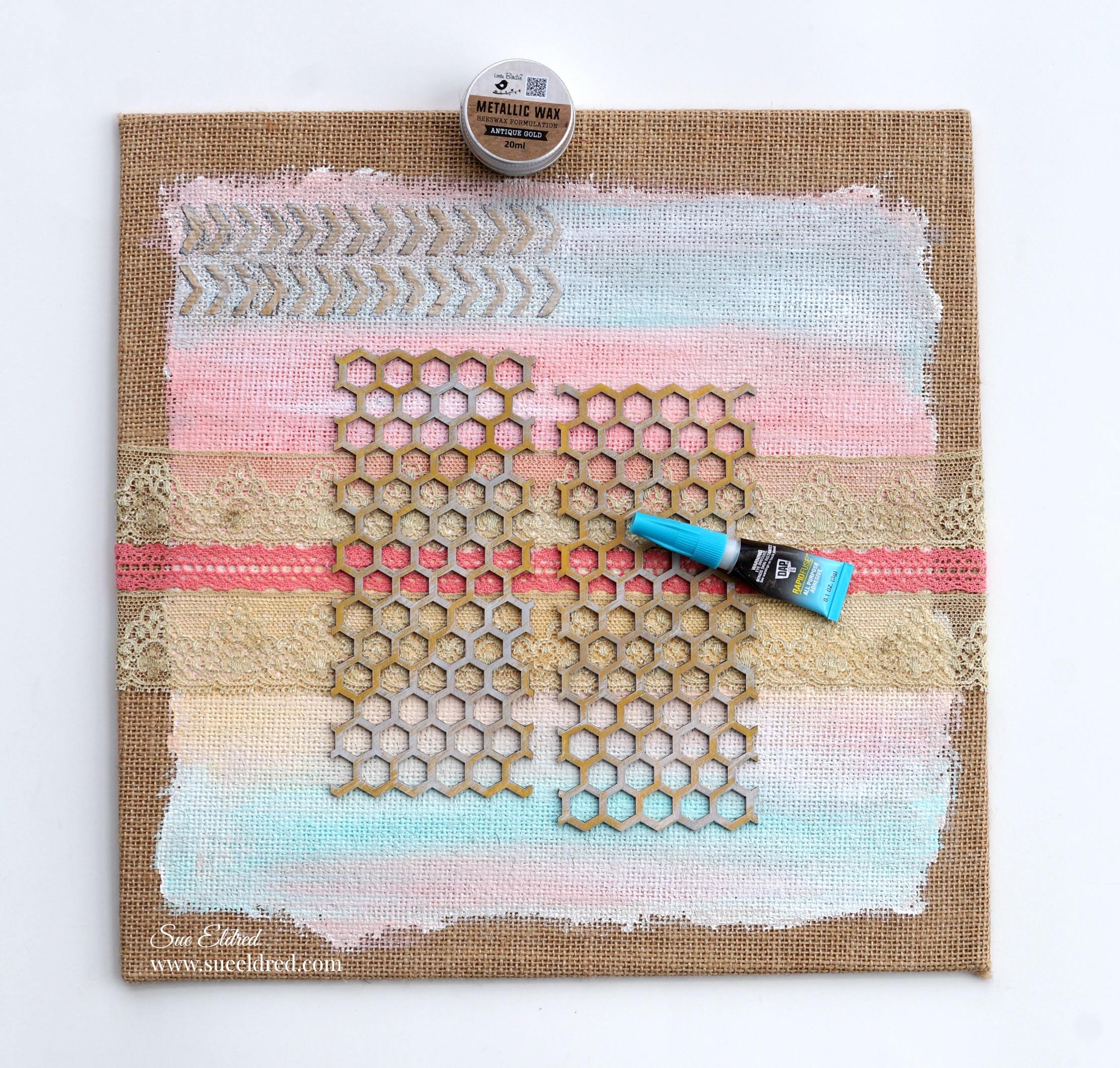
  • Glue vintage lace onto the canvas using mod podge.  Apply a thin layer of mod podge directly to the area on the canvas where I will be adding the lace.
  • Stagger the painted chipboard honeycomb onto the board to create interest and glue in place.

Step 3 and 4  Dimension and Composition

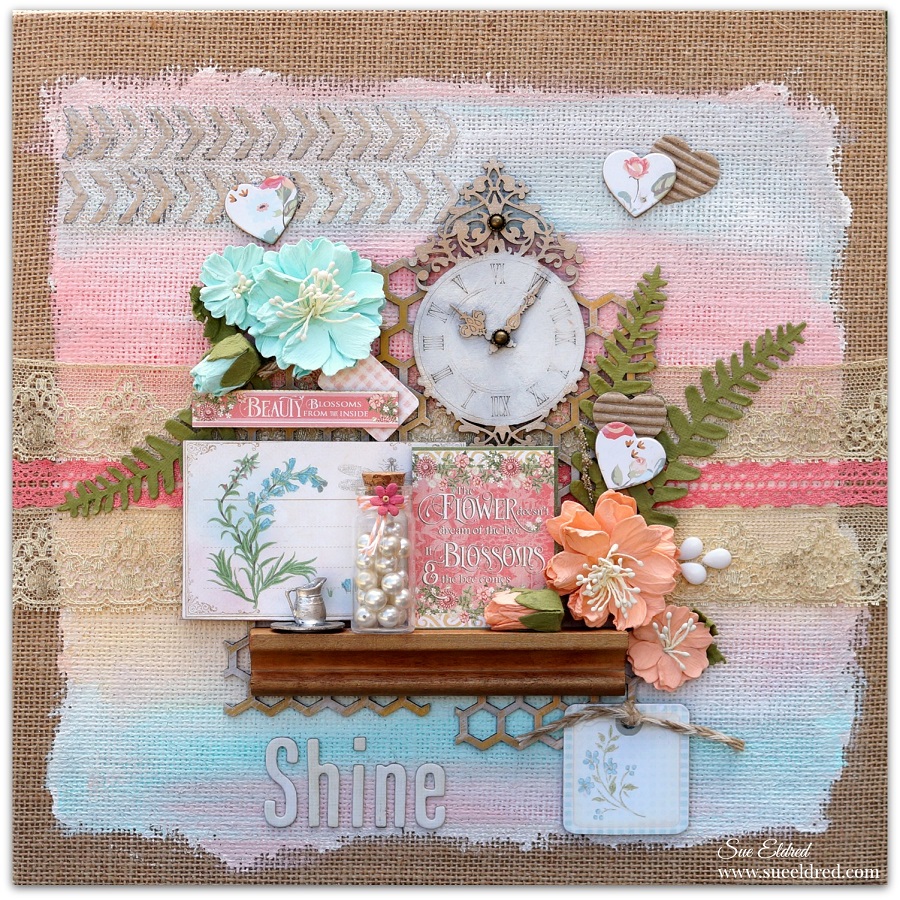
  • Create focus.  The place where you want the eye to land.
  • I like to use an item to anchor my canvas.  An anchor can be a photo or in this case the shelf.
  • To create stability and dimension…I add chipboard to the back of all my paper pieces.
  • Arrange and Rearrange your pieces on the canvas until you are satisfied.
  • Glue pieces on canvas using a strong glue.  (I always find that I add and edit as I glue.)

For the full list of Designers participating in the Little Birdie Crafts Blog Hop click here.

Save

Save

Save